

MORGANTOWN, W.Va. — The lead administrator for the Monongalia County School System hopes to have focused conversations on funding for public schools in upcoming meetings with state legislatures.
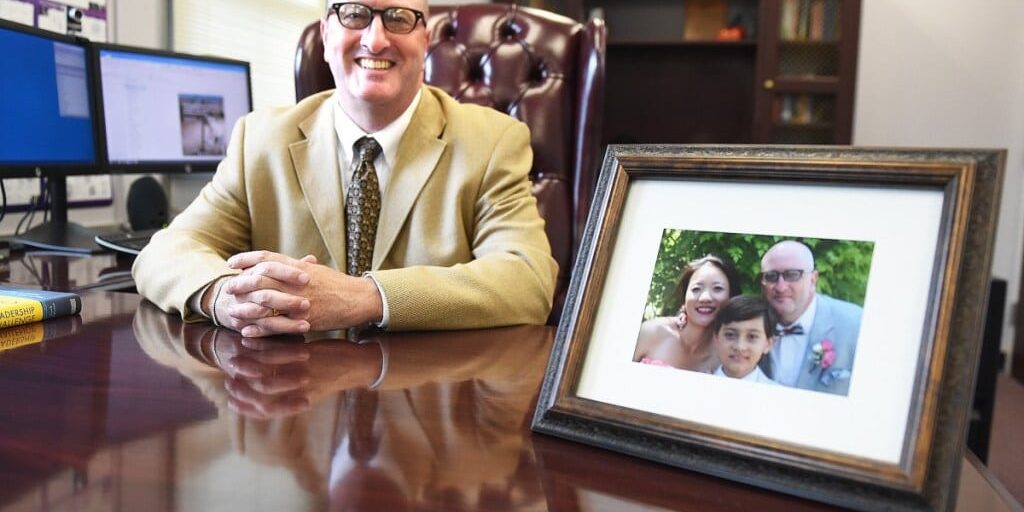
Monongalia County School Superintendent Eddie Campbell will be joined by fellow superintendents across the West Virginia Public School System to discuss legislative priorities, particularly adjusting the state funding formula, with a combination of state delegates and senators in Charleston when the 2026 legislative session begins in January. This is aimed to help address a variety of statewide issues that range from the increased cost of staffing for students to the steady decline in student enrollment that has taken place across the majority of the Mountain State over several years.
“We’re not growing (as a state), we’re losing students, and so the formula itself is just antiquated,” said Campbell. “We offered some specific suggestions and tweaks to the formula that would allow us to fit more of the modern approach to financing schools.”
According to Campbell, the growth-focused aspects of the state funding formula are the most notable in need of change based on costs that account for over three-quarters of a county school system budget for a single school year. This doesn’t account for rising PEIA costs that are selectively covered by county school systems depending on financial situations and other costs that are normally accounted for by a county school levy if it is approved by voters. With those costs expected to rise even if the state funding formula reduces dollars going to systems due to student enrollment, Campbell says an adjustment is needed to keep a significant number of county systems from facing more financial instability than what’s being faced now.
“Somewhere between 85 and 90 percent of your funds go towards staffing, and those numbers have not been adjusted,” said Campbell. “There are more needs for people than there were 10, 15, or 20 years ago, but the numbers haven’t adjusted, and so we’re being funded for less and less people.”
Campbell also hopes to discuss any potential legislation that can be adjusted to allow for an expansion in curriculum across the public school system in West Virginia. This includes an expanded focus on programs that can create a career pathway for jobs within the Mountain State while also supporting high-end STEM-focused programs to allow for students to receive exposure to scholarship opportunities across the country. With the job market continuing to evolve as college attendance in West Virginia trends downward and trade school applications continue to keep pace, Campbell feels an updated curriculum for public schools is more than needed, along with an adjustment to funding.
“That idea of flexibility, especially in graduation requirements, we’re basically a one-size-fits-all (right now),” said Campbell. “We don’t give our kids a lot of opportunity to explore different pathways.”
The call to adjust the West Virginia Public School Funding Formula is not only supported by Campbell but also by a significant number of other superintendents across the Mountain State. This includes Preston County School Superintendent Brad Martin, who mentioned in a written statement to WAJR reporters that rising costs of PEIA and increased accountability regarding the HOPE Scholarship, as well as a reassessment of the public employee retirement system, were also priorities for educators heading into the 2026 legislative session. With plans to meet with state lawmakers in the coming months, Campbell appears ready to work to help find long-term solutions for West Virginia public education.
“We as superintendents have been in front of the state legislature on two occasions now,” said Campbell. “We did promise Delegate Statler at the meeting on Sunday that we certainly want to be a partner and will be a partner as they take a hard look at pre-K through 12 public education.”