

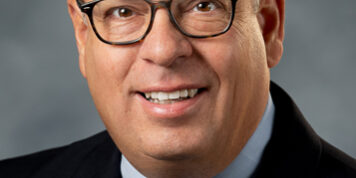
MORGANTOWN, W.Va. — Monongalia County State Senator Mike Oliverio has begun the push to pass a piece of legislation related to the financing of West Virginia roads that was previously vetoed in the past.
Senate Bill 8 is now under consideration by state officials as part of the 2026 Legislative Session, with Senator Oliverio sponsoring the bill, which would require the West Virginia Division of Highways to develop a transparent funding formula to account for road maintenance statewide. This bill is presented over five years after a similar bill was passed in the legislature by representatives from the same region but was vetoed by then-Governor Jim Justice.
“We want continued discussion as to how Division of Highway dollars are spent,” said Oliverio. “And this is one way to initiate that discussion is to develop a formula.”
As part of S.B. 8, the state would be required to have the West Virginia Division of Highways Commissioner Todd Rumbaugh develop a formula that would account for counties in accordance with population and infrastructure factors. This includes the amount of population growth for each county, the total lane miles in a county, the number of bridges and their conditions, and the number of vehicle miles traveled within a county. This would all be subject to approval for the 2027 legislative session if S.B. 8 passes all the legislative hurdles.
“Our roads, when people come into that community, need to be well maintained,” said Oliverio. “We need an appearance that when someone arrives, they say, ‘Hey, this is the place I want to relocate my family and come work here.'”
According to Oliverio, the purpose of the push for S.B. 8 stems from years of what was considered insufficient care of state-supported roads and highways, which in some cases in DOH District 4 (which covers areas such as Monongalia and Preston counties), reached the point where they were undrivable. To address the efforts, legislation was originally passed back in 2019 as part of a bill sponsored by Monongalia County Delegate John Williams to update the requirements for the DOH funding formula, which was vetoed by Governor Justice shortly after the session ended. Added to the measures taken to support the funding of private contractors to address full-scale road repairs, Oliverio and many other local leaders within District 4 are ready for long-term solutions.
“Secretary Wriston told us consistently that he had a maintenance plan, and they tried to adhere to that plan,” said Oliverio, explaining past conversations with DOH officials on MetroNews Talkline. “And sometimes the plan was we’re going to ditch along the side of the road every three years, and then we’d say, ‘Hey, this road here, it’s been seven years since it’s had ditching.'”
If S.B. 8 passes within the remaining 50-plus days left in the 2026 Legislative Session, Rumbaugh would need to determine a funding formula for state roads that would go through a standard public comment period ahead of a presentation to legislators starting in 2027. If the proposed formula is approved on a legislative level, the funds would be appropriated to counties over a five-year period. With a similar measure already getting a green light from lawmakers close to a decade ago, Oliverio hopes that sentiment can be seen again.
“If at the end of the day we can’t develop a specific formula that everybody can agree on, that the legislature can pass, that the governor can sign, at least we will have engaged in a discussion such that these districts have reasonable funding based on their needs,” said Oliverio.